

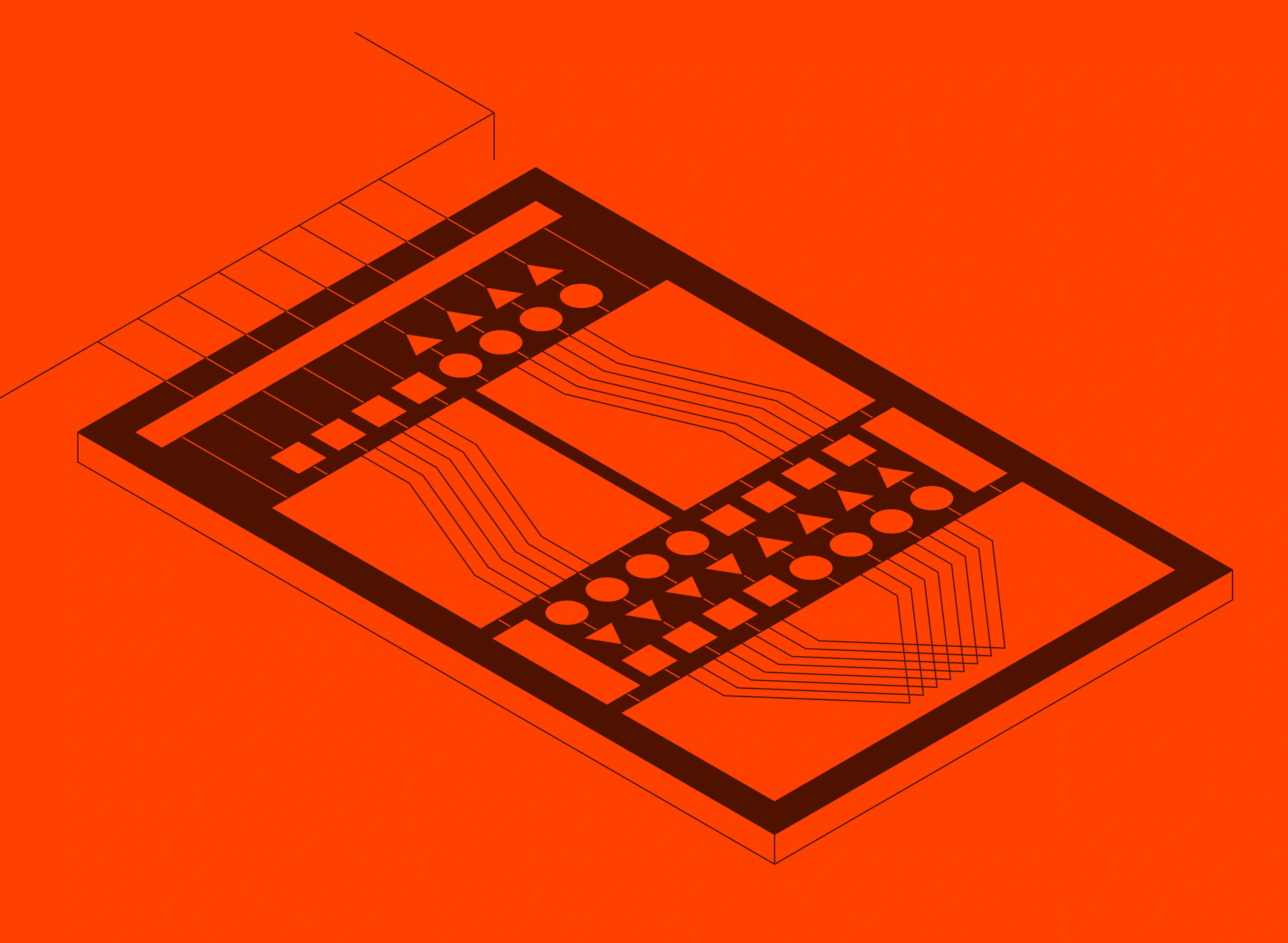
Hartley Ultrafast, a deep-tech hardware company based in Bristol UK, today emerged from stealth at the Microelectronics UK 2025 expo in London, revealing its vision for ultrafast optoelectronic accelerators and demonstrating its first photonic computer, Babbage.
Hartley is building the world's fastest decision making machines, bringing artificial intelligence to the scale of single nanoseconds for the first time. Its proprietary optoelectronic architecture encodes information in pulses of light for frictionless data flow and ultrafast calculations, and uses fast electronics to emulate neural excitations. This hybrid approach brings the speed of light to machine intelligence, minimising the latency that prevents AI usage in critical real-time applications.
"The really intuitive, human decisions we make everyday, spotting trends and risks, following hunches, computers can now contemplate these decisions too," said founder and CEO, Dr Josh Silverstone. "At Hartley, we're bringing these human-like snap decisions to previously impossible timescales, and opening up a whole new world of opportunity."
At Microelectronics UK, the Hartley team unveiled their architectural proof of concept machine, Babbage, the company's first photonic neural network computer. Using time-of-flight processing and opto-mechanical weights, Babbage runs AI inferences in around 176 nanoseconds. Remarkably, 85% of this delay is simply the time it takes for light to traverse the device's optical fibre.
The team named this first machine for Victorian visionary Charles Babbage, whose mechanical computer designs laid the foundation of modern digital computing. Indeed, the company's own designs resemble a photonic clockwork that the great man himself might have recognised.
Though Hartley plans a series of multimillion-pound photonic chips to implement their low-latency vision, Babbage was built with budget telecom components at a fraction of the cost. Despite this, it validates key elements of the company's patent-pending architecture, proving that key barriers such as jitter and noise can be overcome. Looking ahead, Hartley expects its first-generation chip to be a billion times smaller, with 100x more neurons, running 100x faster and with less than 1/1000 the energy.
Bristol has long been home to radical feats of engineering, from the roar of Concorde's quarter-million horsepower to the quiet breakthroughs of its quantum labs. Hartley Ultrafast draws on this heritage. After a decade of photonic quantum computing architecture, the Hartley team is now harnessing that technology to make human agency faster.